Alison is the Hero in this Journey

Alison is the Hero in this Journey
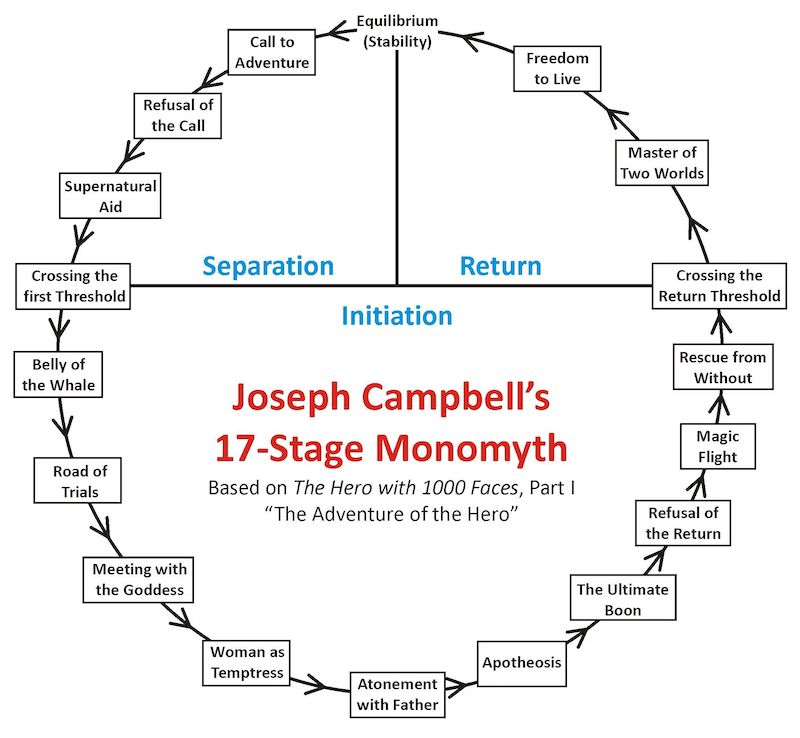
Fun Home follows the story of the author Alison Bechdel trying to figure out her sexuality, and at the same time, also learning new things about her dad. After our discussion in class on how her dad is the Anti-hero, I got to thinking that maybe Alison is sort of like the Hero in this story. I think that the 3 steps in the Hero’s journey template that really show Alison as the Hero are “The Call to Adventure” and “The Freedom to Live” steps.
“The Call to Adventure” step is described as “the would-be hero is living a normal, boring life, usually without the cosmic-level conflict that is present later on. At some point, the hero finds himself being called on an adventure” (Colorado Community College System). I think that, just like other steps, “The Call to Adventure” can be shown in several places in Fun Home. I personally think that “The Call to Adventure” is shown when she sees the woman trucker in the cafe, and she realizes that’s what she wants to basically look like. Now I know what you’re probably thinking. This scene is pretty far into the book, How can this be “The Call to Adventure”? I think that this scene sort of really makes her realize that she does want to be a lesbian, but she decides to hide her sexuality. When Alison is having lunch with her dad and sees the trucker, she thinks, “I didn’t know there were women who wore men’s clothing and had men’s haircuts. But like a traveler in a foreign country who runs into someone from home – someone they’ve never spoken to, but know by sight – I recognized her with a surge of joy” (Bechdel 118). This quote sort of shows that this was the moment that she realized that people can have short hair and wear men's clothing. She also realizes that she wants to look like that, but she hides it.
“The Freedom to Live” step in Joseph Campbell’s Hero’s Journey template is described as “[the hero] is freed by their victory to live however they want” (Colorado Community College System). I think that “The Freedom to Live” step can be shown in several places in Fun Home, but I personally think that this step only sticks out in one place, and that’s when she decides to accept her sexuality. When Alison is in college, she finally decides to accept her sexuality without being scared of who she is. She starts telling people that she’s a lesbian after she went to the Gay unions meeting. After that meeting, she says to her roommate, “I'm a lesbian” (Bechdel 210). I think that it shows her deciding not to hide who she is anymore.
Works cited:
Bechdel, Alison. Fun Home. Mariner Books, 2007
“The Monomyth: Understanding the Seventeen Stages of the Hero’s Journey.” Colorado Community College System, 2023. https://pressbooks.ccconline.org/worldmythology-cccs/chapter/understanding-the-seventeen-stages-of-the-heros-journey/


Hey Antje! Your connection of Fun Home with the Hero's Journey troupe is really neat. I feel like we focused a lot on it's Coming of Age parts (as that is the class we are in), but "Fun Home" does lean a lot towards Hero's Journey. "The Call to Adventure" you claim Alison has fits well with her life story, it's at the beginning of her life, when she begins to realize her sexuality. I find it interesting that that scene is so far into the book, which makes it seem like it may not fit Alison's "Call to Adventure", even though it does quite well.
ReplyDeleteHi Antje, I think your interpretation of Alison's experience and the Hero's Journey is very accurate. Alison grows up in a time where homosexuality faced a lot of judgments and prejudices, yet the fact that she was still able to eventually confidently claim her identity by college fits the trope very well. Great blog :P
ReplyDeleteThe timeline in the book is kind off weird chronologically. The scene where she denies wanting to dress like the other woman would probably go to the beginning of the book if we are following a chronological order. Also, yes, this is the moment where her journey begins. I agree that she shows her "freedom" when she announces her coming out. This can also be shown when she sends letters to her parents on declaring her coming out! Well done!
ReplyDeleteHi Antje, this was a very interesting blog on one of my favorite themes in the book, the Hero's journey. I like the idea that you can arguably place these points in many different places rather than just one precise location. But the points you chose make a lot of sense: for call to adventure, her seeing the trucker woman. I was wondering if the call to adventure could be even earlier, as she later attributes her sexuality to how she used to wear boys' clothes as a child.
ReplyDeleteHi! I think this is an interesting take, and I agree to the fact that Alison (the author) describes repeatedly throughout the book that her and her father kind of complete each other in the sense that they are the same in what they are opposite. Because of this, one would be led to conclude that Alison must be the hero if Bruce is the antihero. To this notion, I also agree. Where my thoughts from yours diverge is on the matter which makes each hero or anti-hero. I think it is not their respective sexualities that decide their heroism or anti-heroism (and their acceptances or lack thereof) but rather their freedoms to be at all. And I do not think that Alison is defined as a hero because her father is the anti-hero, instead it is in the opposite way that they relate.
ReplyDeleteHi Antje! I really enjoyed your depiction of Alison's experiences as following the template of a Hero's Journey. I'd add on however, that the complexity of the non-linear storytelling and the constant amendments that Alison makes to the memories she presents complicate the picture a bit. Instead of going through a relatively simple and straightforward Hero's Journey, Alison's adventure is one with many bumps in the road and foggy points, though overall, I thought your interpretation was really revealing!
ReplyDeleteHello Antje! I think your blog was very creative the way you tied the book to the 17 steps of a hero's journey. I can agree with you that even though the scene with the woman trucker was far into the book already but it can totally be seen as the call to adventure part. The part where she actually comes out in college and accepts herself for who she is represents the freedom to live perfectly as she is finally able to freely live as her own identity. I liked how you made this connection with this book!
ReplyDeleteHi Antje! I like the idea of Alison's "Call to Adventure" moment being the one in which Alison sees the woman dressed as a man at the truck stop. I also think it's significant that Alison's dad directly confronts her about this, asking her if she wants to look/dress like that. Throughout Alison's childhood, there are extremely few instances in which she is directly confronted about her sexuality. This is one of the few moments where a figure in Alison's life seems to truly see her. Great blog!
ReplyDeleteThere are so many ways to interpret or reframe the hero's journey structure, and I've mentioned in class how often coming-of-age narratives also map onto the hero's journey archetype pretty closely (we could put together a hero's journey rendition of Holden's narrative or Esther's narrative without too much difficulty). But I really like the idea that the "return home" as the "freedom to live"--a form of self-discovery and self-revelation that doesn't necessarily mean conformity to the larger society but the forging of a distinctive and free place within that society. Bechdel pretty explicitly casts her personal coming-out story in terms of a hero's journey, walking us through each of the steps in chapter 7. It is possible to see the "call to adventure" happening much earlier, though, and Bechdel does depict the college self-realizations as being the culmination of something Alison had "known" for a long time already. Interestingly, she depicts her own journey as relatively friction-free: without the unexpected twist having to do with the news about her father, there wouldn't be much of a story there. So in an odd way, her father's death and the revelations about his secret life enable Bechdel to depict herself as engaged in more of a *struggle*, and that struggle gains meaning in the context of a hero's journey.
ReplyDeleteHi Antje! Nice job comparing the hero's journey template to Allison's story. Although late in the story, "The Call to Adventure" could be when Allison sees the woman trucker in the cafe. "The Freedom to live" could also be when Allison decides to accept her sexuality by going to the Gay unions meeting, telling people that she is lesbian, and telling her roommate that she is lesbian.
ReplyDelete